
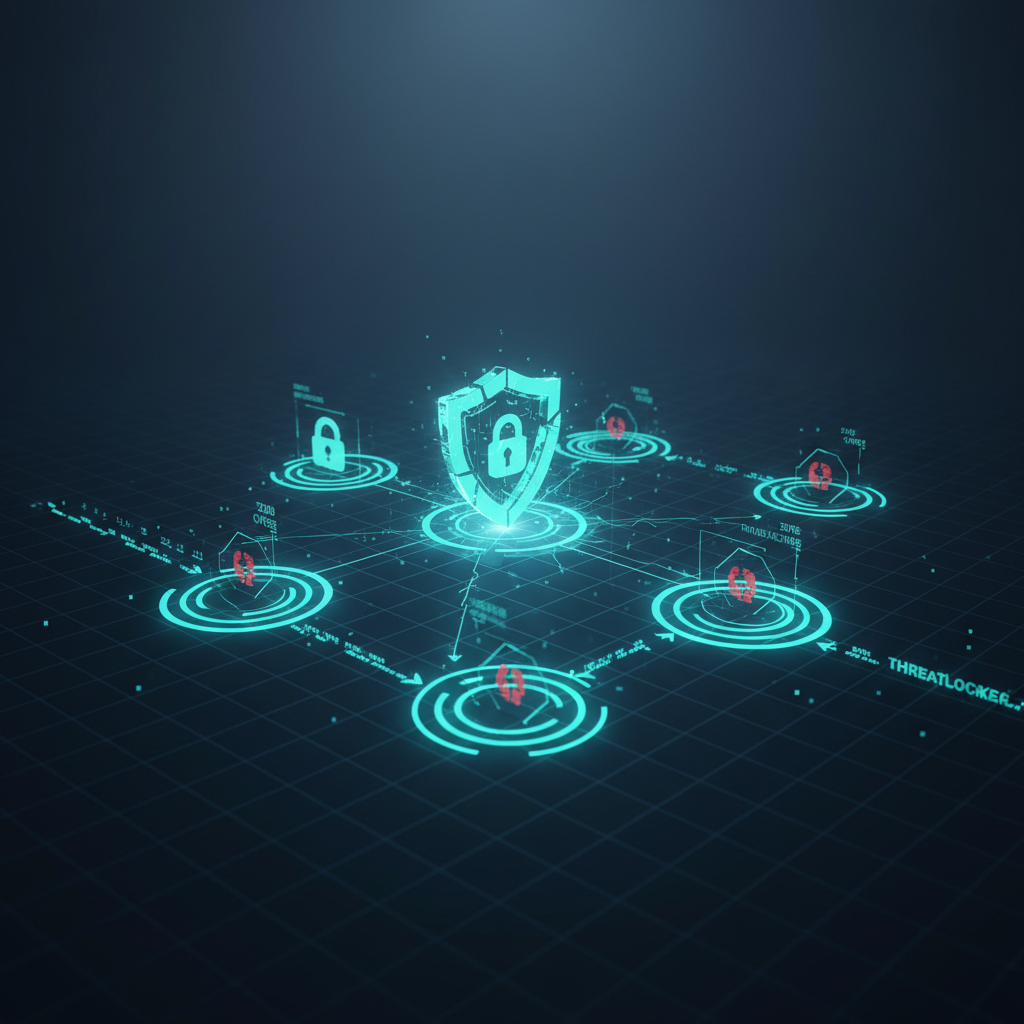
The Challenge of Constant Evolution in Cybersecurity
The cybersecurity domain is characterized by constant evolution. New vulnerabilities are discovered daily, necessitating a proactive and adaptive defense strategy. Traditional, often reactive, security models struggle to keep pace with this rapid change, leaving organizations exposed to significant risk. The emergence of high-profile CVE exploits underscores the urgency for a more dynamic security framework.
Consider, for instance, the recent wave of exploits targeting critical infrastructure and widely used software. These vulnerabilities, once public, become immediate targets for malicious actors. An effective security strategy cannot wait for a breach to occur; it must anticipate and mitigate potential exploits before they can be leveraged.
Embracing Incremental Security for Adaptive Defense
The concept of incremental computation, where systems efficiently recompute only necessary parts of a larger result when inputs change, offers a powerful analogy for modern cybersecurity. Instead of massive, infrequent security overhauls, MZERO promotes an 'incremental security' model. This involves continuous, granular adjustments and enhancements to an organization's security posture, ensuring that defenses are always optimized and responsive to new threats.
This philosophy is central to the MZERO platform. We believe that by building security in a step-by-step, verifiable manner, organizations can achieve a more resilient and adaptable defense against the full spectrum of cyber threats, from sophisticated nation-state attacks to opportunistic ransomware campaigns.
Leveraging ThreatLocker for Granular Control
At the core of MZERO's incremental security approach are powerful tools like ThreatLocker, which provide the granular control necessary to implement these continuous improvements. ThreatLocker's suite of modules offers robust capabilities that align perfectly with an incremental security strategy:
- Application Whitelisting: This foundational module ensures that only approved applications are allowed to run, effectively neutralizing broad categories of malware and unauthorized software. Instead of trying to block everything bad (a reactive and often losing battle), whitelisting incrementally builds a list of trusted applications, making it incredibly difficult for new threats to execute.
- Ringfencing: ThreatLocker's Ringfencing takes control to another level by defining precisely what applications can do. This means even if an authorized application is compromised, its ability to interact with other applications, folders, or network resources can be severely limited. This is an incremental layer of security that prevents lateral movement and privilege escalation, even within a trusted environment.
- Storage Control: Unauthorized access to critical data is a primary concern. Storage Control enforces policies on who can access, modify, and delete files on specific drives and folders. This incremental control over data access adds a crucial layer of protection against unauthorized exfiltration and ransomware encryption.
- Elevation Control: Many exploits leverage standard user accounts to gain elevated privileges. Elevation Control allows organizations to grant temporary, audited administrative rights for specific tasks, minimizing the attack surface associated with permanent administrative access. This fine-grained control is another example of an incremental security measure that significantly reduces risk.
- Network Access Control: Understanding and controlling network access is vital. ThreatLocker's Network Access Control module allows for the creation of precise rules governing communication between applications and network resources. This ensures that even if an application is compromised, its communication with internal or external networks can be curtailed, interrupting potential command-and-control channels.
By implementing these modules incrementally, an organization can steadily enhance its security posture, responding to new threat intelligence and CVEs with surgical precision rather than broad, disruptive changes. For example, upon the announcement of a new CVE affecting specific software, an organization can immediately deploy Ringfencing policies to restrict that software's interactions, even before a patch is available.
MZERO: Your Partner in Proactive Cybersecurity
Managed Zero Trust (MZERO) is committed to helping organizations build and maintain robust cybersecurity defenses. Our strategic implementation of technologies like ThreatLocker ensures that your organization benefits from a proactive, adaptive, and incrementally strengthened security framework. We understand that effective security is not a one-time project but a continuous journey of improvement.
Our expertise allows us to translate complex security challenges, including the mitigation of new CVE exploits, into actionable and manageable strategies. We work with IT Directors, CISOs, CIOs, and Managed Service Providers to tailor solutions that fit their unique operational needs and risk profiles. Our goal is to empower your organization to navigate the threat landscape with confidence, knowing that your defenses are continuously evolving to stay ahead of adversaries.
Stay Ahead of the Curve with MZERO
In a world where cyber threats are constantly evolving, an incremental and adaptive security strategy is not just an advantage—it's a necessity. Let MZERO help you implement a security framework that is resilient, responsive, and always improving.
Ready to enhance your organization's cybersecurity posture with a proactive, incremental approach and leverage the full power of ThreatLocker's modules? Schedule a free assessment with MZERO today.