
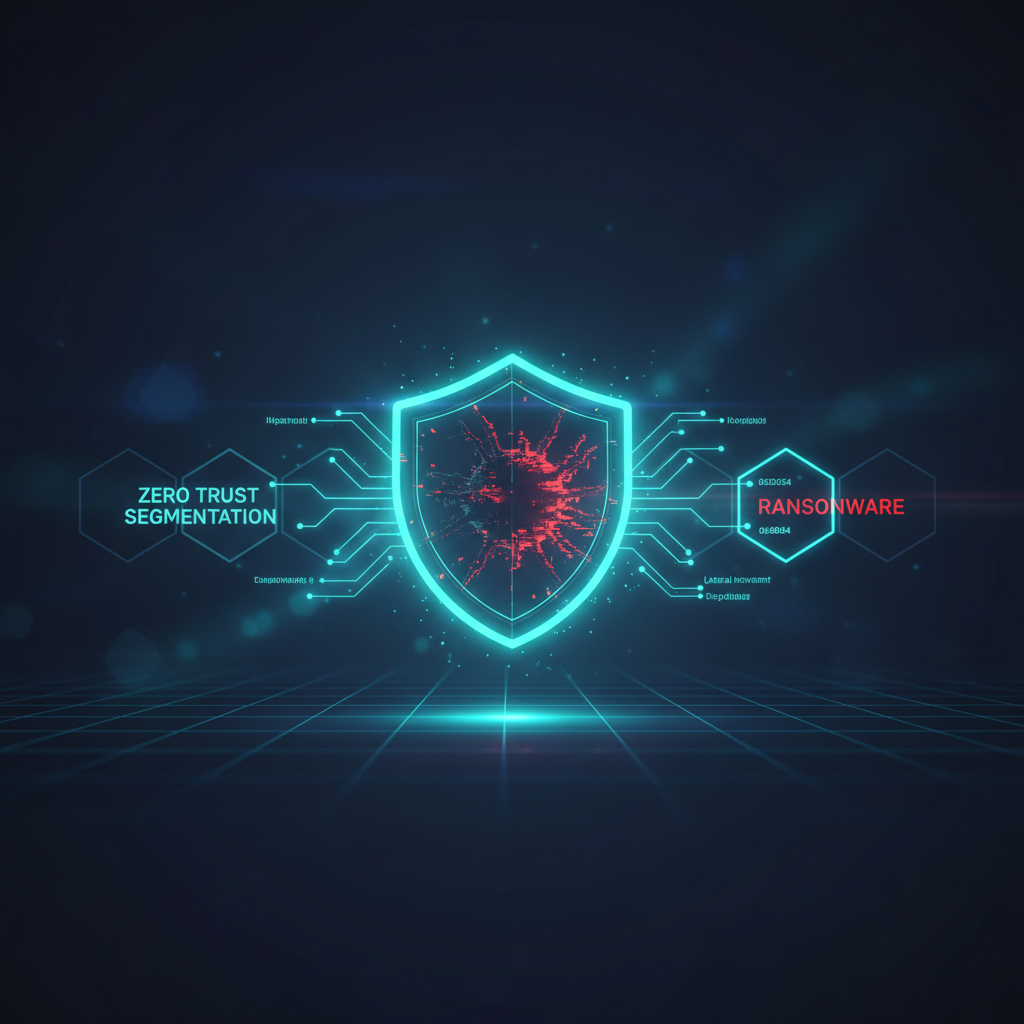
The Unseen Threat: Ransomware's Lateral Advance
Ransomware continues to be one of the most formidable threats facing organizations today, evolving in sophistication and impact. While initial compromise often garners significant attention, it's the subsequent lateral movement within a compromised network that truly amplifies the damage. Attackers, once inside, systematically probe and exploit vulnerabilities to gain access to critical systems, exfiltrate sensitive data, and ultimately encrypt vital assets. This unchecked lateral spread can transform a localized incident into an organization-wide catastrophe, crippling operations and incurring astronomical recovery costs. For Managed Service Providers (MSPs), protecting their clients from such devastation is paramount, requiring proactive and robust security architectures.
Zero Trust: The Foundation of Modern Cybersecurity
At MZERO, we champion the principles of Managed Zero Trust as the bedrock of an unyielding cybersecurity posture. The core tenet of Zero Trust — 'never trust, always verify' — fundamentally shifts security paradigms from traditional perimeter-based defense to an identity- and context-aware approach. This philosophy assumes that threats can originate from both outside and inside the network, necessitating continuous verification for every access request. Within this framework, Zero Trust Segmentation emerges as a powerful mechanism to limit the blast radius of any potential breach, particularly in the face of ransomware.
Zero Trust Segmentation: Containing the Inevitable Breach
Granular network segmentation, a direct application of Zero Trust principles, is not merely about dividing a network; it's about meticulously isolating resources and applications based on their absolute necessity for communication. By micro-segmenting the network, a breach in one segment does not automatically grant intruders free rein across the entire infrastructure. Instead, their lateral movement is severely restricted, forcing them to confront an additional layer of verification and authorization at every boundary. This containment strategy is exceptionally effective against ransomware, which relies heavily on unchecked internal propagation to achieve its objectives.
How Zero Trust Segmentation Frustrates Ransomware:
- Halts Lateral Movement: By enforcing strict access policies between network segments, ransomware is prevented from spreading from an infected workstation to critical servers, databases, or backup systems. Each access attempt between segments requires re-authentication and re-authorization.
- Limits Blast Radius: Even if a segment is compromised, the impact is confined to that specific area, preventing the ransomware from encrypting the entire organization's data. This allows for faster isolation, remediation, and recovery.
- Enhances Visibility: Implementing segmentation mandates a deeper understanding of network traffic flows and dependencies. This increased visibility helps in rapidly identifying anomalous behavior indicative of ransomware activity.
- Isolates Critical Assets: High-value assets, such as domain controllers, financial systems, and intellectual property repositories, can be placed in highly restricted segments with stringent access controls, making them exceedingly difficult for ransomware to reach.
- Supports Incident Response: In the event of an infection, segmented networks allow security teams to quickly quarantine affected areas without disrupting operations in healthy segments, streamlining the response and recovery process.
Practical Implementation Steps for MSPs Using MZERO
MZERO provides the tools and expertise to implement robust Zero Trust Segmentation. Our platform leverages ThreatLocker modules to operationalize these principles effectively:
1. Application Whitelisting with ThreatLocker Application Control:
This foundational module ensures that only approved applications are permitted to run within each segment. By default, everything else is blocked. This directly prevents unauthorized executables, including ransomware payloads, from launching and initiating the encryption process or network scanning.
2. Ringfencing™ for Process Isolation:
ThreatLocker's Ringfencing takes application control a step further by restricting what legitimate applications can do. For example, a word processor might be allowed to run, but Ringfencing can prevent it from accessing network shares or executing PowerShell scripts — common ransomware behaviors. This creates micro-perimeters around critical applications and processes within segments.
3. Storage Control for Data Protection:
Granular control over file access ensures that only authorized users and applications can read, write, or delete data on network shares and local storage. This directly counters ransomware's primary objective: data encryption. By limiting write access to specific applications and users, the ability of ransomware to encrypt files en masse is severely hampered.
4. Network Access Control (NAC) and Micro-segmentation:
Beyond application-level controls, robust NAC solutions, integrated with a Zero Trust philosophy, enforce policies based on user identity, device posture, and context. This allows for dynamic segmentation, where access to network resources is granted only when all conditions are met. For example, isolating specific VLANs or subnets for critical servers and ensuring communication between them is strictly limited to necessary protocols and ports.
5. Privileged Access Management (PAM):
Elevated privileges are a common target for ransomware. Implementing PAM solutions ensures that administrative rights are granted on a just-in-time, just-enough basis. This minimizes the attack surface for privilege escalation, which ransomware often uses to spread.
Beyond Prevention: Rapid Recovery with Segmentation
While prevention is always the goal, organizations must also prepare for the eventuality of a breach. Zero Trust Segmentation significantly aids in recovery. By containing the ransomware to a specific segment, forensic analysis can be more focused, and remediation efforts can be executed with greater precision, reducing downtime and impact. Furthermore, isolated backup systems, protected by stringent segmentation policies, can facilitate quicker and more reliable data restoration.
Conclusion
For MSPs striving to deliver unparalleled cybersecurity to their clients, Zero Trust Segmentation is not an option; it's a necessity. It represents a proactive, resilient defense mechanism that transforms a network from a flat, permeable landscape into a fortified, compartmentalized fortress. By meticulously controlling every access attempt and limiting lateral movement, organizations can dramatically reduce their exposure to ransomware, converting potential widespread devastation into contained, manageable incidents.
Protect your clients from the ever-present threat of ransomware. Discover how MZERO’s Zero Trust platform, powered by leading-edge modules, can fortify your defenses and ensure business continuity.